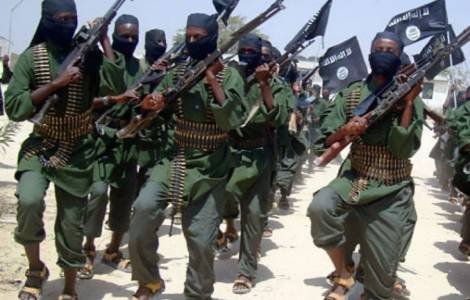
JNIM: The Evolution, Strategy, and Influence of a Sahelian Insurgency
Posted in :

Over the past decade, Jama’at Nasr al-Islam wal Muslimin (JNIM) has emerged as one of the most influential armed movements in the Sahel. Its rise reflects not only the spread of jihadist ideology in West Africa but also the deep structural crises affecting the region—weak governance, rural marginalization, ethnic tensions, and porous borders.
Understanding JNIM is essential to understanding the broader instability reshaping the Sahel today.
Origins: A Coalition Born from Fragmentation
JNIM formally announced its creation in March 2017 as a merger of several jihadist factions operating across the region. The coalition unified:
- Ansar Dine
- Al-Qaeda in the Islamic Maghreb
- Al-Mourabitoun
- Macina Liberation Front
The merger was designed to consolidate command structures, reduce internal rivalry, and present a more coordinated insurgency aligned with Al‑Qaeda.
This unification allowed JNIM to shift from scattered militant actions to a sustained regional campaign capable of confronting national armies and international forces.
Leadership and Ideological Direction
JNIM is led by Iyad Ag Ghaly, a Tuareg figure whose deep local roots distinguish the group from externally driven jihadist organizations.
Unlike movements that rely heavily on foreign fighters, JNIM’s leadership strategy emphasizes:
- Embedding within local communities
- Leveraging ethnic and clan networks
- Framing its struggle as both religious and political
This localization has made JNIM particularly resilient and difficult to uproot.
Geographic Expansion Across the Sahel
Since its formation, JNIM has steadily expanded operations across three core states:
- Mali – the group’s original stronghold
- Burkina Faso – now a major theater of operations
- Niger – an expanding frontier zone
These countries sit at the heart of the Sahel, a vast semi-arid belt stretching across Africa that has become one of the world’s most active conflict zones.
JNIM’s mobility across borders allows it to exploit weak state presence in rural areas, retreat when pressured, and reappear elsewhere—an approach often described as “liquid insurgency.”
Strategy: Winning Influence Rather Than Territory
Unlike conventional militant groups that prioritize holding cities, JNIM focuses on gradual social control.
1. Rural Entrenchment
JNIM embeds itself in remote communities where government services are scarce. It offers:
- Mediation of local disputes
- Protection arrangements
- Enforcement of its interpretation of Islamic law
This governance-by-default can make the group appear, to some residents, as an alternative authority rather than simply an armed faction.
2. Asymmetric Warfare
The group relies heavily on:
- Roadside bombings (IEDs)
- Ambushes on military patrols
- Attacks on supply routes and infrastructure
These tactics are designed to exhaust national armies rather than defeat them outright.
3. Information and Psychological Operations
JNIM uses propaganda to frame itself as:
- A defender of marginalized populations
- A resistance force against foreign influence
- A movement restoring justice in neglected regions
This messaging has helped recruitment, particularly among young men facing unemployment and insecurity.
Relationship with Local Communities: Coercion and Cooperation
JNIM’s influence cannot be explained by ideology alone. Its success is tied to complex local dynamics:
- In some areas, it exploits intercommunal tensions, particularly disputes over land and grazing.
- In others, it provides order where state institutions have collapsed.
- It often negotiates rather than imposes itself immediately, creating pragmatic alliances.
This hybrid model—part insurgency, part shadow governance—has enabled it to endure even under heavy military pressure.
Confrontation with Regional and International Forces
JNIM has fought against a range of actors, including:
- National militaries in the Sahel
- Regional coalitions
- International counterterrorism missions deployed during the past decade
Despite large-scale operations against it, the group has proven adaptable:
- It decentralizes command to avoid leadership decapitation.
- It blends into civilian environments to complicate targeting.
- It shifts tactics quickly when confronted with new technologies such as drones or surveillance systems.
JNIM vs. Rival Extremist Groups
JNIM’s primary jihadist rival in the Sahel has been the regional branch of the so-called Islamic State. The two movements differ significantly:
| Feature | JNIM | Islamic State Affiliates |
|---|---|---|
| Alignment | Al-Qaeda network | ISIS global structure |
| Strategy | Community integration | Territorial domination |
| Governance | Negotiated influence | Harsh centralized rule |
| Recruitment | Localized | Often more transnational |
These differences have occasionally led to violent clashes between jihadist factions themselves, further complicating the region’s conflict landscape.
Why JNIM Has Proven So Durable
Several structural conditions explain the group’s staying power:
Weak State Presence
Large rural zones lack consistent administration, allowing armed actors to fill the vacuum.
Economic Marginalization
Limited access to jobs, education, and infrastructure fuels grievances that JNIM can exploit.
Geographic Challenges
The Sahel’s vast, lightly governed terrain makes sustained counterinsurgency extremely difficult.
Political Instability
Frequent coups and transitional governments disrupt long-term security planning.
Regional Impact: Beyond a Single Insurgency
JNIM is no longer just a militant organization—it is a major force shaping Sahelian geopolitics.
Its activities:
- Undermine state authority across borders
- Disrupt trade corridors and agriculture
- Drive mass displacement and humanitarian crises
- Influence how regional governments design security alliances
In many ways, JNIM has become both a symptom and a driver of the Sahel’s instability.
The Future of JNIM
Looking ahead, analysts see three possible trajectories:
- Prolonged Low-Intensity Conflict
The most likely scenario, where JNIM remains embedded and difficult to defeat outright. - Fragmentation
Internal divisions or leadership losses could splinter the coalition back into localized factions. - Transformation into Political Actor
Some experts warn that, if negotiations ever occur, JNIM could evolve into a hybrid militant-political movement similar to insurgent groups seen in other regions.
Conclusion: A Movement Rooted in Local Realities
JNIM’s endurance demonstrates that the Sahel’s crisis is not solely about terrorism. It is about governance, identity, development, and the long shadow of state absence in vast rural territories.
Military operations alone have struggled to dismantle the organization because JNIM operates within the very social and economic fractures that define the region. Any long-term solution will likely require not just security responses, but also political reconciliation, rural investment, and restoration of state legitimacy.
Until those deeper challenges are addressed, JNIM will remain a central actor in shaping the Sahel’s uncertain future.