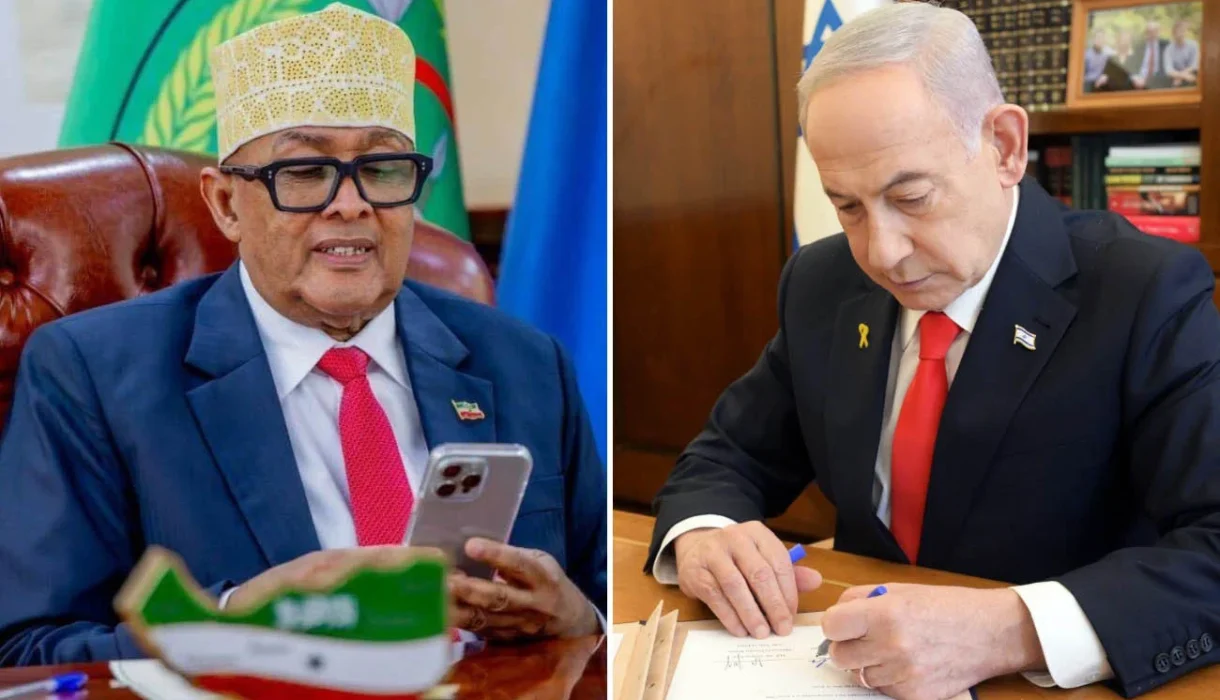

On December 26, 2025, a decades-old diplomatic taboo was shattered when the State of Israel became the first United Nations member state to formally recognize the Republic of Somaliland as a sovereign nation. For Hargeisa, it was the “Golden Key” to a 34-year-old lock; for Israel, it was a high-stakes move to secure its maritime lifelines in the Gulf of Aden.
As we move through February 2026, the implications of this “Christmas Surprise” are reshaping the Horn of Africa, Red Sea security, and the very definition of statehood in the 21st century.
The Hargeisa Breakthrough: Why the First Domino Fell
Somaliland has operated as a de facto independent state since 1991, following the collapse of the Siad Barre regime in Somalia. Despite building a functioning democracy, a separate currency, and a stable military, it remained in a state of “diplomatic limbo” for over three decades.
The alignment with Israel was not an overnight development. It was the culmination of clandestine “runway diplomacy”—which saw Israeli technical teams inspecting Soviet-era airfields in 2022—and a shared strategic anxiety over the rise of Islamist militancy and Iranian influence in the Red Sea.
- The Abraham Accords Framework: Prime Minister Benjamin Netanyahu and Somaliland President Abdirahman Mohamed Abdullahi (Irro) signed the recognition via a historic “Facetime Declaration.” By framing the move within the Abraham Accords, Israel signaled that Somaliland is now a formal partner in the pro-Western regional bloc.
- The “Recognition Dividend”: Somaliland’s 2026 budget has already seen a 22% revenue boost attributed to the “Recognition Dividend.” This shift allows Hargeisa to move beyond informal trade toward sovereign-to-sovereign lending and direct foreign investment in its mineral-rich interior.
The Strategic Prize: Maritime Depth and Intelligence
From a military perspective, Israel’s recognition of Somaliland is a direct response to the “Red Sea Crisis” of 2024–2025. Somaliland’s 850-kilometer coastline is situated immediately south of the Bab al-Mandab Strait, a maritime chokepoint through which 12-15% of global trade transits.
Following the visit of Israeli Foreign Minister Gideon Sa’ar to Hargeisa on January 6, 2026, the two nations finalized a security pact that includes:
- Maritime Surveillance: The establishment of Israeli-managed signals intelligence (SIGINT) stations along the Golis Mountains to monitor Houthi and Iranian naval movements.
- Berbera Modernization: While the port is managed by DP World, Israel is providing cybersecurity and drone-defense systems to protect the hub from Houthi “suicide drone” attacks, which were threatened shortly after the recognition.
The Counter-Bloc: Mogadishu, Ankara, and Cairo
The recognition has acted as a catalyst for a new “Axis of Sovereignty” led by Turkey and Egypt, both of whom view Israel’s presence in the Horn of Africa as an existential threat to their regional interests.
Somalia: The Existential Challenge
For Mogadishu, Israel’s move is an “act of aggression.” President Hassan Sheikh Mohamud’s administration has pivoted toward a “Total Diplomatic War,” severing ties with the UAE (whom they accuse of facilitating the deal) and appealing to the African Union to sanction Hargeisa. The fear in Mogadishu is that the “first domino” will lead to a chain reaction, with Taiwan or even Ethiopia following suit.
Turkey: The Defender of Unity
Turkey has invested billions in Somalia’s infrastructure and military training. President Erdogan, during his visit to Addis Ababa in February 2026, was blunt: “Israel’s recognition benefits no one and only seeks to fragment the Muslim world.” Ankara has since deployed F-16 jets to its base in Mogadishu (TURKSOM) as a show of force, signaling its intent to protect Somalia’s territorial waters.
Egypt: The Suez Security Concern
Cairo views an Israeli-aligned Somaliland as a “pincer move” around its southern maritime approaches. Egyptian strategists fear that Israeli control over the Gulf of Aden gives Jerusalem indirect leverage over the Suez Canal’s traffic, complicating Cairo’s already tense relationship with Ethiopia over the Nile dam.
The Geopolitical Chessboard: Reactions by Country
The world’s response to the “Somaliland-Israel Axis” has been a study in cautious pragmatism and fierce denunciation.
| Country | Stance (Feb 2026) | Primary Action/Comment |
| Ethiopia | Quiet Support | While officially silent, PM Abiy Ahmed is leveraging the Israeli precedent to push through his own 2024 port-deal-for-recognition MoU with Hargeisa. |
| United Arab Emirates | Strategic Architect | Widely believed to have brokered the deal; the UAE remains Somaliland’s primary economic partner through DP World. |
| United States | Ambiguous Neutrality | Washington reiterates “One Somalia” but has blocked UN Security Council resolutions condemning Israel’s move, recognizing the security benefit of an Israeli presence in the Gulf. |
| China | Hostile | Beijing views Somaliland as “the Taiwan of Africa.” It has warned that supporting separatist movements for “geopolitical gain” sets a dangerous global precedent. |
| Djibouti | Defensive | Fearing the loss of its monopoly as a regional transit hub, Djibouti invalidated 1,400 Somaliland passports in early 2026 to curb Hargeisa’s diplomatic mobility. |
Internal Tensions and the “Disinformation War”
The transition from a de facto state to a recognized partner of Israel has not been without domestic friction. Somaliland is a conservative Muslim society, and the “Gaza Factor” has been weaponized by opponents of the recognition.
A persistent disinformation campaign, allegedly backed by Mogadishu and regional proxies, claimed that the deal included a secret clause to resettle displaced Palestinians from Gaza in the Sahil region of Somaliland. Though President Irro’s government has repeatedly debunked these rumors, the narrative triggered clerics in cities like Burao to issue fatwas against the agreement. In response, the government launched a crackdown on dissent in January 2026, leading to the arrest of several scholars accused of “inciting civil unrest for foreign interests.”
Conclusion: A New Era of “Transactional Sovereignty”
To conclude, the formal recognition of Somaliland by Israel in late 2025 represents a high-stakes gamble that fundamentally challenges the “frozen” diplomatic status quo of the Horn of Africa. By prioritizing “functional sovereignty” and strategic depth over established international norms of territorial integrity, Israel has effectively broken the seal on Somaliland’s isolation, potentially paving the way for other pragmatic powers—such as Ethiopia or even certain Western nations—to follow suit. However, this breakthrough is a double-edged sword; while it grants Hargeisa a sovereign-to-sovereign bridge to the global economy and advanced security technology, it also embeds the territory within the volatile “Abrahamic” versus “Anti-Secessionist” rivalries of the Middle East, turning the Gulf of Aden into a new theater for proxy competition.
The success of this alliance will ultimately hinge on Somaliland’s ability to manage the “Expectation Gap” between its elite diplomatic triumphs and the traditional values of its conservative Muslim population. While the promised “Recognition Dividend” of increased foreign direct investment and technological aid in agriculture and water management offers a path to prosperity, the persistent rumors of external agendas—ranging from military bases to population resettlement—remain potent tools for regional agitators. To survive the coming years, Hargeisa must not only secure its borders but also win the “battle for perception,” proving that its independence is an anchor for regional stability rather than a trigger for further fragmentation.
Looking ahead, the Horn of Africa is entering an era of “Transactional Sovereignty,” where traditional alliances are being replaced by fluid, interest-based partnerships. As Mogadishu strengthens its defense pacts with Ankara and Cairo to counter the Israeli presence, the risk of a regional arms race grows. The international community now faces a stark choice: continue to uphold the “One Somalia” theory in the face of dwindling relevance, or adapt to the operational reality of a sovereign Somaliland. Whether this bold diplomatic maneuver leads to a prosperous new state or a deepened regional conflict, one thing is certain—the map of the Red Sea has been redrawn, and the geopolitical ink is now permanently dry.