

As the future of Syria is reshaped through the strategic maneuvers of regional actors and the shifting alliances of minority groups, geopolitical balances signal a transformation beyond traditional borders. In this article, Dr. Zekeriyya HamodanAhmad, a renowned expert on Lebanon and Middle East politics, reveals that the current administrative landscape in Syria is being engineered by power centers far deeper than the figure of Ahmed al-Sharaa alone. According to the author, the country is drifting toward a new administrative order defined as “sectarian federalism” rather than outright partition, driven by the central authority’s inability to show flexibility and the influence of external interventions.
At the heart of the article are the alleged contacts between the Druze and Alawite communities and Israel, and the impact of this situation on Turkey’s influence in the region. Israel’s effort to build an “advanced buffer zone” through local actors instead of direct military intervention converges with the U.S. desire to control energy corridors, turning Syria into a global strategic chessboard. By analyzing the tactical weaknesses of regional actors and the structural obstacles to potential normalization processes, Ahmad argues that the federal structure envisioned for Syria is not merely a local preference but an international engineering project.
When examining current developments on the Syrian political stage, it is evident that Ahmed al-Sharaa is not the figure managing this picture alone. For this reason, it is essential to look at the power centers that are actually shaping the policies, reached understandings, and deepening disagreements in Syria.
The policies al-Sharaa pursues, based on the countries he engages with, indicate that the country is moving toward a declared federalism rather than outright partition. While federalism is a system of governance, partition typically emerges through confederal structures.
In the specific context of Syria, this situation points to a sectarian federalism design that has been reflected in public American plans since the beginning of the 21st century as the “New Middle East” or “Maps of Blood.”
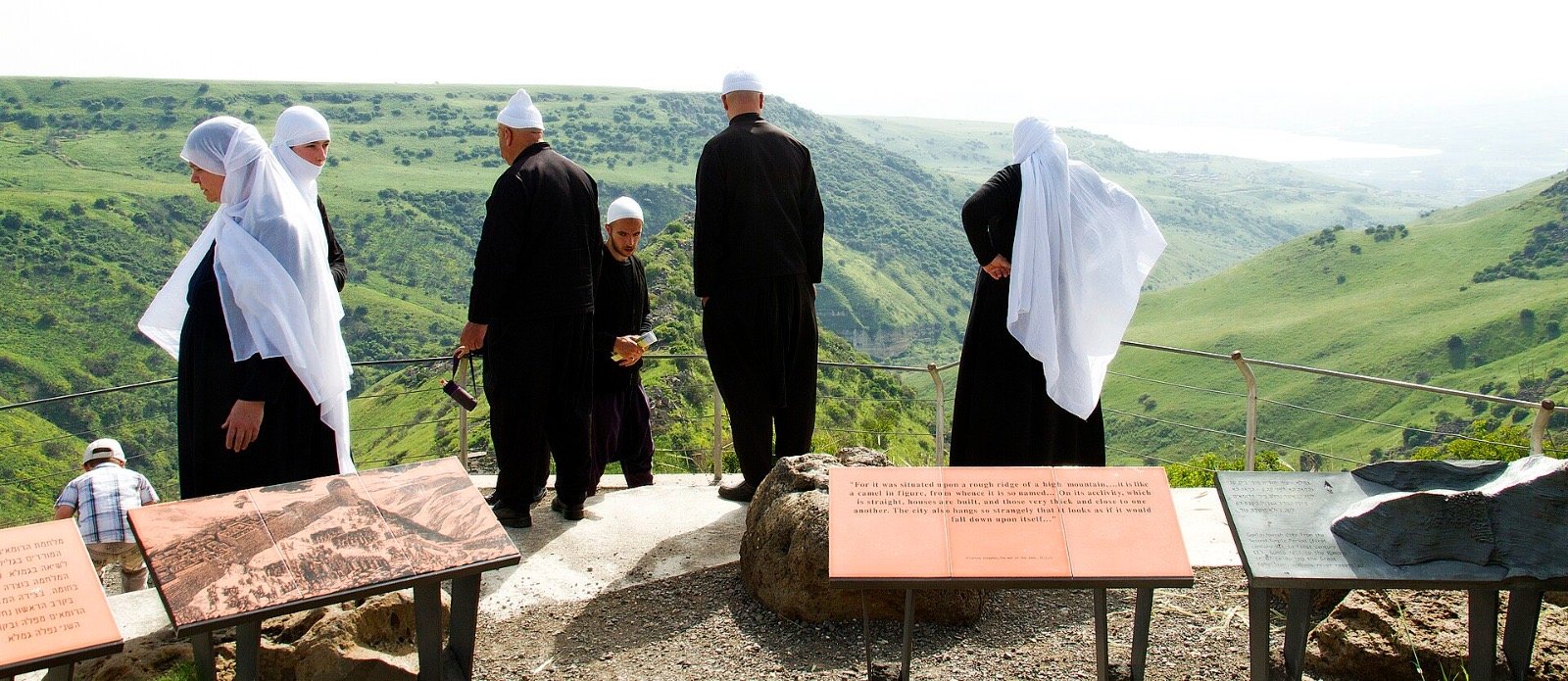
The targeting of the Druze community can be evaluated as an effort by the state authority and the public security apparatus, led by Ahmed al-Sharaa, to extend their power into these regions. On the other hand, at the core of the conflict between the Druze and the central authority lies the fact that al-Sharaa and his regime have failed to demonstrate the necessary flexibility to meet the demands of this group.
At this point, the support provided by Israel to the Druze has drawn them politically toward Israel and created the potential for them to gain an autonomous status within the state structure. In summary, the goal is not to divide Syria completely, but to build a federal system that serves the interests of the United States and Israel while simultaneously weakening Turkey’s influence in Syria.
Druze and Alawites are demanding a federal structure
Both the Druze community and the Alawites along the coastal strip (the Tartus, Jableh, and Latakia line) are demanding a federal structure. According to current information, both groups are considered to be in contact with Israel; however, meeting the demands of the Druze—who are geographically adjacent to Israel—is much easier compared to the Alawite region.
Federalism emerges as the solution rather than full independence; while independence implies total separation, federalism is the solution closest to the original structure of the state, where a central federal government coexists with affiliated provinces or unions.
Israel’s strategy envisions expansion through new alliances rather than direct military intervention. It creates new geographic footholds through Druze or Sunni actors in southern Syria, providing these groups with political support directly and through the Americans. Once these regions gain autonomy, military protection and support can be phased in without the direct involvement of the Israeli government.
This is a process of Israel constructing an advanced buffer zone through the Druze in Syria, Sunnis in the south, and Alawites on the Mediterranean coast to protect its own territory. The short-term goal of this strategy is to create border security and a forward line; the medium-term goal is to consolidate control in these regions; and the long-term strategic goal is to fully seize these areas and colonize them through Judaization.
Will Syria Sign the Abraham Accords?
One of the biggest obstacles to normalization between Syria and Israel is the risk of a potential conflict between ISIS and Hay’at Tahrir al-Sham toppling the regime, which could completely eliminate stability in Syria. Another obstacle is that a normalization process that excludes Turkey will not be accepted by Turkey, thereby destabilizing Syria. A third point is the Iran factor; although Iran’s presence in Syria has weakened, it still possesses the potential to create instability to disrupt an agreement between Israel and Ahmed al-Sharaa.
The likelihood of Syria and Israel signing the Abraham Accords is high due to strong U.S. support; however, instability remains the fundamental negative factor facing this process. While Turkey is not opposed to the idea of normalization, it will object to a scenario where its own interests are ignored and its share is given to others.
This objection could lead to instability that makes it impossible to include Syria in the agreement. The future of these relations depends on ensuring internal stability in Syria, distracting the public from this issue through economic aid, and resolving the deep-seated problems between Turkey and Saudi Arabia.
Today, Alawites and Druze look for a solution not in Turkey, but in Israel, which they perceive as being closer to understanding them. It is observed that these communities demand Israeli protection to weaken Turkey and serve Israeli interests. It is further observed that Turkey has not yet implemented a plan to open secret channels with the Alawite and Druze communities to establish full control over all of Syria.
While Turkey’s role is of strategic importance, it has remained tactical; its absence from the Lebanese arena and its failure to consolidate relations with Alawite/Druze groups—despite playing a key role in regime change—is a distinct weakness. To regain the initiative in Syria, Turkey must resort not only to diplomacy but also to indirect power, and strategically apply pressure toward the Israeli border along the Lebanon-Syria line. It is assessed that as one moves closer to the Israeli border, the U.S. and Israel will step back and offer more guarantees.
The primary objective of the United States is to gain control over global energy resources and the pipeline project that will transport Central Asian gas to the Mediterranean via Syria. This move aims to increase its influence over Europe after disrupting the relationship between Europe and Russia, and to support the pressured U.S. economy by controlling the energy geography.
The policies of Saudi Arabia and the United Arab Emirates (UAE) are largely aligned with U.S. plans. However, while Saudi Arabia’s activities may cause conflicts within Syria, the UAE’s ties, especially with the Druze and Alawites, are more tactical and robust. In general, the decisions of Arab countries regarding Syria are shaped under the U.S. umbrella, and the ability of these countries to make independent decisions regarding Syria is limited.