

This comprehensive interview with Algerian journalist Oualid Kebir offers a critical deep dive into the increasingly complex geopolitical landscape of North Africa and the Sahel through the lens of Algiers. Kebir analyzes Algeria’s regional approach as being anchored by three primary pillars: a focus on security, the containment of Moroccan influence, and a persistent effort to restore its status as a regional mediator. The discussion provides a timely examination of how Algeria has transitioned from a self-proclaimed guarantor of stability to a reactive “firefighting” policy, navigating heightened tensions with the Alliance of Sahel States (AES) and a deepening diplomatic rift with Morocco.
Furthermore, the article explores the strategic competition between Algeria’s infrastructure projects, such as the Trans-Saharan Gas Pipeline, and Morocco’s Atlantic Initiative, highlighting a fundamental shift in how regional leadership is contested. Kebir sheds light on the internal contradictions of Algerian foreign policy, where military-driven diplomacy and selective applications of sovereignty often collide with the economic realities of a hydrocarbon-dependent state. For those seeking to understand the shifting power dynamics and the future of the Maghreb-Sahel axis in 2026, this analysis serves as an essential guide to the risks and opportunities facing one of Africa’s most pivotal actors.
Oualid Kebir
What is Algeria’s current overall approach to its neighboring countries in the Maghreb and Sahel, and how has this strategy evolved in the past year?
In my view, Algeria’s general approach toward its regional environment is based on three pillars: security, preventing the expansion of Morocco’s influence, and attempting to restore its role as a regional mediator, particularly in the Sahel region. However, these pillars no longer generate real influence as much as they reveal a certain level of confusion in Algeria’s overall strategy.
Over the past year, Algeria has shifted from the discourse of being a regional power guaranteeing stability to a policy of “putting out fires”—meaning dealing with crises such as tensions with Mali and broader strains with Sahel countries. This represents a relatively new development in Algeria’s relations with the region. At the same time, the traditional pattern persists: a sharp rivalry with Morocco in the Sahel.
More recently, Algeria has sought to repair relations with Niger, Burkina Faso, and Chad following the crisis involving the downing of a Malian drone at the border inMarch 2025. Some studies also indicate that since early 2026, Algeria has intensified its engagement with Sahel countries—Niger, Burkina Faso, and Chad—reasserting its role in the Sahel after a deterioration in its relations with members of the Alliance of Sahel States (AES), and then using this as leverage primarily in its relations with France, which has lost influence in the region.
How would you characterize the present state of Algeria-Morocco relations, particularly regarding the Western Sahara dispute and border issues, and what scenarios do you foresee for the future?
The current state of relations between Algeria and Morocco—especially regarding the Western Sahara dispute and border issues—is unfortunately characterized by longstanding tension. Since the 1960s, relations between the two countries have mostly been abnormal, marked by recurring crises. The land border has been closed since 1994, and diplomatic relations have been severed since August 2021. Algerian political and media discourse toward Morocco has reached an unprecedented level of hostility.
On the Western Sahara issue, there is a shifting international reality. Algeria now finds itself facing increasing global support for Morocco’s autonomy proposal, especially after the recent UN Security Council Resolution 2797 issued at the end of last October. Meanwhile, the separatist narrative promoted by the Polisario Front—backed by Algeria—has gradually lost its persuasive power.
Algeria’s issue with Morocco now goes beyond diplomacy; it has become a deeper political and psychological matter, as the Algerian regime has built part of its legitimacy on opposing Morocco.
The most likely scenario is the continuitiyof the current rupture and a continuation of the “cold war” between the two countries, possibly with further media and diplomatic escalation, though a direct military confrontation remains unlikely. Another scenario could involve Algeria attempting to reactivate the Polisario card whenever Morocco makes progress internationally, whether at the UN, in Africa, or in the Sahel—although this strategy is becoming increasingly difficult, especially given recent moves by U.S. senators to designate the Polisario as an Iran-backed terrorist organization, which puts Algeria in a difficult position.
A third scenario could involve successful U.S. mediation leading to a relative de-escalation, potentially even restoring diplomatic relations or reopening embassies under a U.S.-brokered agreement. Unfortunately, the Algerian regime has transformed Morocco from a strategic neighbor—one that could have offered mutual benefits—into a functional adversary used primarily for domestic political purposes, particularly to divert attention from internal political and economic challenges.
It would have been far more beneficial to build a strong regional Maghreb bloc, both politically and economically. However, the current approach has moved in the opposite direction.
What are the key elements of Algeria’s ongoing cooperation with Tunisia and Libya, and how stable do you expect these partnerships to remain in the coming years?
Cooperation between Algeria, Tunisia, and Libya is primarily based on border security, combating smuggling, migration management, political coordination, and also economic cooperation—especially in the energy sector. Algeria considers Tunisia as a strategic security depth, while Libya is viewed as an arena where Algeria must prevent its rivals from gaining full control, particularly given Libya’s internal divisions.
However, I consider these partnerships to be unstable for several reasons. Tunisia is experiencing a political and economic crisis, and many of the gains achieved by the Tunisian people have been lost in recent years due to the policies of President Kais Saied. The economic situation could potentially become explosive.
As for Libya, it remains divided, with a government in the east and another in the west, alongside multiple centers of power. I believe Algeria deals with both countries from a logic of guardianship—particularly security guardianship—rather than an equal partnership, which makes these relationships inherently unstable.
Algeria may be able to exert influence in Tunisia and in western Libya, particularly with the Tripoli-based government, but it cannot lead them. There is a significant difference between influence and leadership. Leadership requires economic attractiveness, investment, openness, and trust—elements that are not evident in Algeria’s partnerships with Tunisia and Libya.
We do not see a meaningful economic impact in either country stemming from Algeria, even though these are precisely the factors that could sustain long-term stability.
Can you describe Algeria’s current diplomatic and security engagement with Mali, including the situation in northern Mali (Azawad), and what role Algeria might play there going forward?
Relations between Mali and Algeria are highly sensitive. Historically, Algeria has viewed itself as the main sponsor of peace settlements in Mali, particularly through the Algiers Agreement signed in 2015. However, since the rise of the military council led by Assimi Goïta and his consolidation of power in Bamako, along with the growing presence of Russia—and to some extent Turkey—trust between the two sides has deteriorated significantly, and Algeria’s role has clearly declined.
The crisis involving the downing of a Malian drone near the border in 2025 marked a serious turning point. Mali accused Algeria of shooting down the drone near Tinzaouatine, while Algeria claimed that the drone had violated its airspace. The crisis led to harsh reciprocal measures, including the closure of airspace between the two countries. Mali took the case to the International Court of Justice, but legal proceedings indicated that the case could not move forward without Algeria’s consent to the court’s jurisdiction.
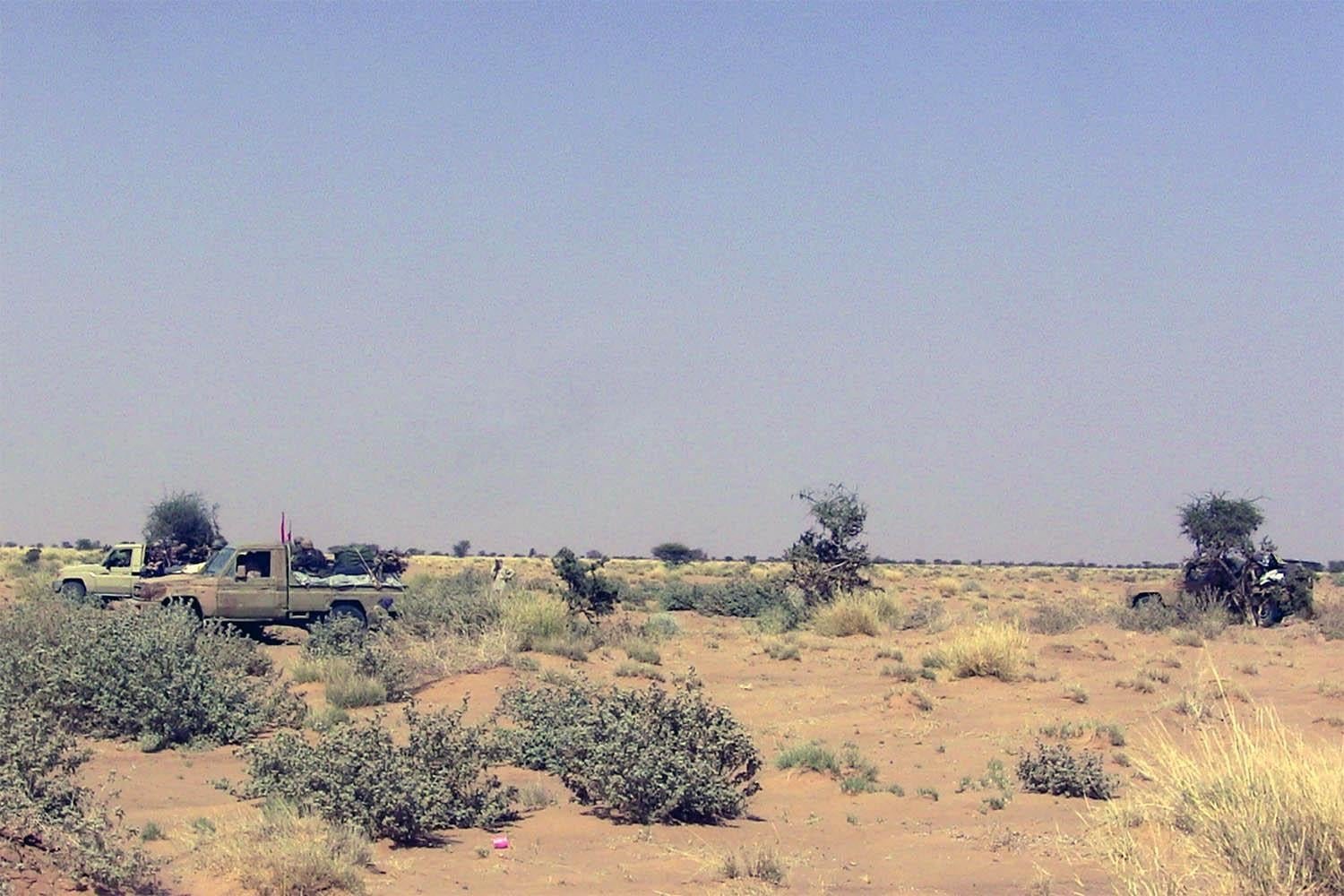
The situation in northern Mali is even more complex. It involves a mix of Azawad movements, jihadist groups, Russian influence, a weak Malian state, and regional competition. As seen at the end of last week, jihadist groups made advances in northern Mali at the expense of the Malian army, which is now attempting to regain control after suffering attacks.
Looking ahead, and given the strained relations between the two countries, Algeria appears to be seeking to play three roles:
1 – A mediator between Bamako and northern actors, particularly the Azawad Liberation Movement
2 – A preventive actor against the emergence of an independent Azawad state, which Algeria views as a direct threat due to potential spillover of separatism into its southern regions, given the social and human ties between southern Algeria and northern Mali
3 – A security partner in counterterrorism efforts alongside international actors.
However, the main problem is that the Algerian regime currently lacks the trust of the authorities in Bamako. Algeria seeks to position itself as an arbiter, but actors in Mali—especially the government—now see it as a party to the conflict rather than a neutral mediator, particularly after recent developments. This significantly complicates Algeria’s ability to act as a credible mediator, as it has lost its perceived neutrality in the eyes of both domestic and external stakeholders.
How has Algeria’s relationship with the Alliance of Sahel States (AES — Mali, Niger, and Burkina Faso) developed recently, especially with Niger and Burkina Faso, and what are Algeria’s strategic objectives in this engagement?
The Alliance of Sahel States, which includes Mali, Niger, and Burkina Faso, represents a direct challenge to Algeria. These countries, which have distanced themselves from French influence, have moved closer to Russia and started seeking new economic and political partnerships. Following the crisis with Mali, Algeria’s relations have deteriorated not only with Bamako but with the entire alliance, including Niger and Burkina Faso. The recall of ambassadors in April 2025, after the drone incident in which Algeria shot down a Malian UAV, marked a peak in tensions.
Today, Algeria is attempting to repair its relations with Niger and Burkina Faso. However, the Algerian regime has clear strategic objectives: to weaken this alliance, to prevent Morocco from becoming an Atlantic gateway for Sahel countries, and to counter the initiative launched by the Moroccan king in 2023 aimed at providing landlocked Sahel states access to the Atlantic Ocean.
Algeria also seeks to prevent the emergence of a Morocco–Sahel axis that could marginalize its regional role and make it harder to secure its southern borders. At the same time, it aims to reposition itself as a balancing power between the Sahel, Russia, and the West, using this role as leverage—particularly in its relations with France.
However, a key weakness of the Algerian regime is that it often acts out of fear of Morocco rather than pursuing a positive, independent strategic vision that serves the broader interests of the region. This results in a reactive foreign policy—one that responds to developments rather than shaping them proactively.
In what ways is Algeria managing competition with Morocco’s regional initiatives (such as the Atlantic Initiative) in the Sahel, and what are its own plans for economic and diplomatic influence in neighboring countries?
Morocco’s Atlantic Initiative, launched by the King around five years ago, hasclearly unsettled the Algerian regime because it offers tangible benefits to Sahel countries. We recently saw, during the Chadian president’s visit to Algeria, how the Algerian authorities attempted to replicate this initiative by proposing a similar idea to Chad—granting it access to the port of Djen Djen in eastern Algeria as a Mediterranean outlet.
In this context, Algeria seems to recognize that it has not offered a credible alternative comparable to Morocco’s approach, which is based on a development-oriented vision and an ambitious project, rather than a purely security-driven discourse. As a result, Algeria has recently begun to respond by reactivating the Trans-Saharan Highway, promoting Djen Djen port as a maritime gateway for Sahel countries, and reviving the Nigeria–Niger–Algeria gas pipeline project.
Additionally, Algeria has increased diplomatic engagement, sending delegations to Niamey (Niger), Ouagadougou (Burkina Faso), and N’Djamena (Chad). It also uses rhetoric centered on rejecting “hegemony” to portray Morocco’s initiative as a geopolitical maneuver.
However, the core issue is that Algeria often appears to be reacting to Morocco rather than leading with an independent and proactive vision. While Morocco advances initiatives like the Atlantic project, Algeria tends to respond with counter-projects—such as positioning its gas pipeline as an alternative to the Nigeria–Morocco Atlantic pipeline.
This highlights a fundamental difference: Morocco links development with diplomacy, whereas Algeria still frames its diplomacy largely through security concerns and strategic rivalry with its western neighbor.
What are Algeria’s primary security concerns regarding its borders with Mauritania, Niger, and Mali, and how does the government plan to address cross-border challenges like terrorism and migration in the future?
Algeria faces deep security concerns, including the spread of jihadist groups in northern Mali and Niger, arms trafficking across the desert, irregular migration, fuel and drug smuggling, and fears of instability in the Tindouf camps. There is also concern about the infiltration of armed elements into southern Algeria, which could turn the Azawad region into a renewed hotspot for separatism.
In response, Algeria relies primarily on a militarized border policy, including the use of drones, aerial surveillance, and intelligence coordination—particularly with Mauritania—as well as longstanding security cooperation and tribal and political mediation in northern Mali, especially with Azawad movements. However, a purely security-based approach is insufficient.
Algeria largely treats these cross-border challenges through a security lens alone, which is not enough. The Sahara is a complex social and economic space, with tribal networks, trade routes, and delicate balances. Any actor that fails to understand these dynamics will struggle, regardless of military capacity or financial resources.
Looking ahead, what are Algeria’s main economic and infrastructure plans (such as pipelines, energy projects, or trade corridors) for strengthening ties with its neighbors over the next 5–10 years?
Algeria’s key projects include the Trans-Saharan Gas Pipeline linking Nigeria, Niger, and Algeria; the Trans-Saharan Highway connecting Algeria to Niger and Nigeria; and an ambitious railway extension project from the north toward the south, potentially reaching deeper into the Sahara. There are also plans to establish free trade zones with Mauritania, Niger, and Mali, and to position Algerian ports as gateways for Sahel countries to access the Mediterranean—an idea that echoes Morocco’s Atlantic Initiative aimed at giving Sahel states access to the ocean.
Last February, Algeria announced the resumption of negotiations on the Trans-Saharan Gas Pipeline project. This is not a new initiative; Algeria had previously hesitated due to concerns about competition in its traditional European energy markets. However, following the launch of the Nigeria–Morocco Atlantic gas pipeline in 2019, Algeria revived its own project, which had often been justified—or delayed—on the basis of security concerns, as stated by many Algerian officials.
That said, Algeria’s main challenge lies in a recurring pattern: strong media promotion of projects but slow implementation. Many initiatives are announced with great visibility but ultimately become constrained by bureaucracy, lack of funding, limited transparency, and inconsistent commitment, which undermines their credibility and long-term impact.
How do Algeria’s broader foreign policy principles — such as non-alignment and sovereignty — shape its current and future relations with neighboring countries amid growing external influences from Russia, the West, and others?
Algeria is known for promoting principles such as non-alignment, sovereignty, rejection of foreign intervention, and the right of peoples to self-determination. However, these principles are applied selectively. While Algeria defends sovereignty when it concerns itself, it invokes self-determination in Western Sahara, yet rejects similar discussions in other contexts. For example, it supports Mali’s territorial integrity and opposes the independence of Azawad, while backing separatism in Morocco. This reflects a selective application of its stated principles.
Similarly, Algeria criticizes Western influence but does not object to the expansion of Russian influence when it serves its strategic balance. Although it claims non-interference, it does exert influence in the internal affairs of countries such as Tunisia, Libya, and Sahel states. This creates a clear inconsistency between Algeria’s diplomatic rhetoric and its actual political behavior. As a result, the credibility of its foreign policy discourse has been weakened. A respected foreign policy is not built on slogans alone, but on consistency. Algeria seeks to project a strong sovereign stance, yet it lacks moral and political coherence in applying it.
What opportunities and challenges will Algeria face in strengthening its regional role in North Africa and the Sahel in the coming years? What is its long-term vision for neighborhood policy?
Algeria has significant opportunities: a highly strategic geographic position, long borders stretching over 7,200 km, proximity to both the Sahel and North Africa, vast oil and gas resources, and one of the world’s largest shale gas reserves (alongside countries like China and Argentina). It also has a relatively strong military—ranked around 28th globally—and extensive historical experience in security matters.
However, the challenges are substantial. Algeria faces persistent hostility and tense relations with Morocco, a loss of trust with Mali, and the absence of a diversified and structured economy, with heavy dependence on hydrocarbons. It also lacks economic and cultural attractiveness compared to actors such as Morocco, Turkey, and Gulf countries. Moreover, the dominance of the military establishment over foreign policy decision-making has led to the militarization of Algerian diplomacy, alongside an outdated ideological discourse that no longer aligns with today’s interest-driven global order.
In terms of long-term vision, Algeria’s neighborhood policy appears more defensive than constructive. It is centered on preventing Morocco’s rise, blocking separatism in Azawad, countering terrorism, and limiting Western, Gulf, Turkish, and even Russian influence. This reflects a policy of obstruction rather than one based on offering a positive regional project. Major powers do not build influence through prevention alone, but by presenting attractive alternatives. The key weakness for Algeria is precisely this: what does it offer to its neighbors?
Given the variable state of Algeria–France relations, what are the prospects for the release of detained French journalist Christophe Gleizes, and how have French officials’ efforts in this regard been perceived in Algiers?
The case of journalist Christophe Gleizeshas become both a political and judicial tool within the broader tensions between Algeria and France. The crisis dates back to summer 2024, following France’s shift in its position on Western Sahara, when Paris openly leaned toward Morocco’s proposal. France has officially expressed regret over Gleizes’ case after he was sentenced to seven years in prison, criticizing the ruling as a blow to press freedom.
The broader crisis between Algeria and France also involves issues such as visas, deportations, and diplomatic tensions. As for the possibility of his release, it remains plausible, but it is unlikely to come through a normal judicial process. In my view, it would more likely occur through a presidential pardon במסגרת a quiet political deal, possibly as part of Algeria’s efforts to ease tensions with Paris.
The Algerian authorities tend to use such cases as political leverage, as seen in previous instances. The regime often emphasizes the sovereignty of its decisions, only to later present releases as gestures of goodwill. This reflects a deeper structural issue: the lack of judicial independence, with the judiciary often functioning as an instrument of foreign policy within the Algerian system.